

He was born on Dec. 26, 1893, in Shaoshan, a village in Hunan province, into a peasant family that had climbed just far enough to hire labour of its own. His father, Mao Yichang, dealt in grain and counted every coin. His mother, Wen Qimei, was a devout Buddhist who fed beggars at the door. Mao worked the fields from the age of six and fought his father from about the same age. He left home at sixteen, and the argument he had been having in that farmhouse he went on having with the whole of Chinese society.
Changsha gave him a schooling and the 1911 revolution gave him a rifle. He served six months as a soldier, then went back to his books. By 1918 he had made his way to Beijing, where he became a library assistant at Peking University. Already influenced by anti-imperialism and Chinese nationalism, he became a Marxist during this period. Mao attended the founding of the Chinese Communist Party (CCP) in July 1921.
From there the rise was fast. Mao was elected to the CCP Central Committee in 1923 and moved to Shanghai. Then, in 1927, forces allied to the nationalist Kuomintang (KMT) slaughtered communists in the Shanghai massacre, followed by other attacks, which eventually led to a civil war between communists and nationalists.
The party that survived that slaughter survived because it went to the countryside. Mao mobilised peasants and was instrumental in organising the 1934-35 Long March from Jiangxi to Shaanxi to evade KMT forces. He also became Chairman of the Politburo, backed by Soviet leader Joseph Stalin.
The war against Japan interrupted the war at home. During World War II, the communists and the KMT formed a temporary alliance to fight the Japanese. However, the civil war eventually resumed, leading to a communist victory. On Oct. 1, 1949, Mao proclaimed the People’s Republic of China.
The republic was barely a year old when it went to war again. Mao sent Chinese troops to fight in the Korean War, which helped push imperialist forces out of the DPRK.
At home the transformation went deeper. He launched land reform campaigns that significantly reduced economic inequality. Nearly half of all arable land in China changed hands in under three years, redistributed to some 300 million peasants. Around 90 per cent of the rural population went through the process.
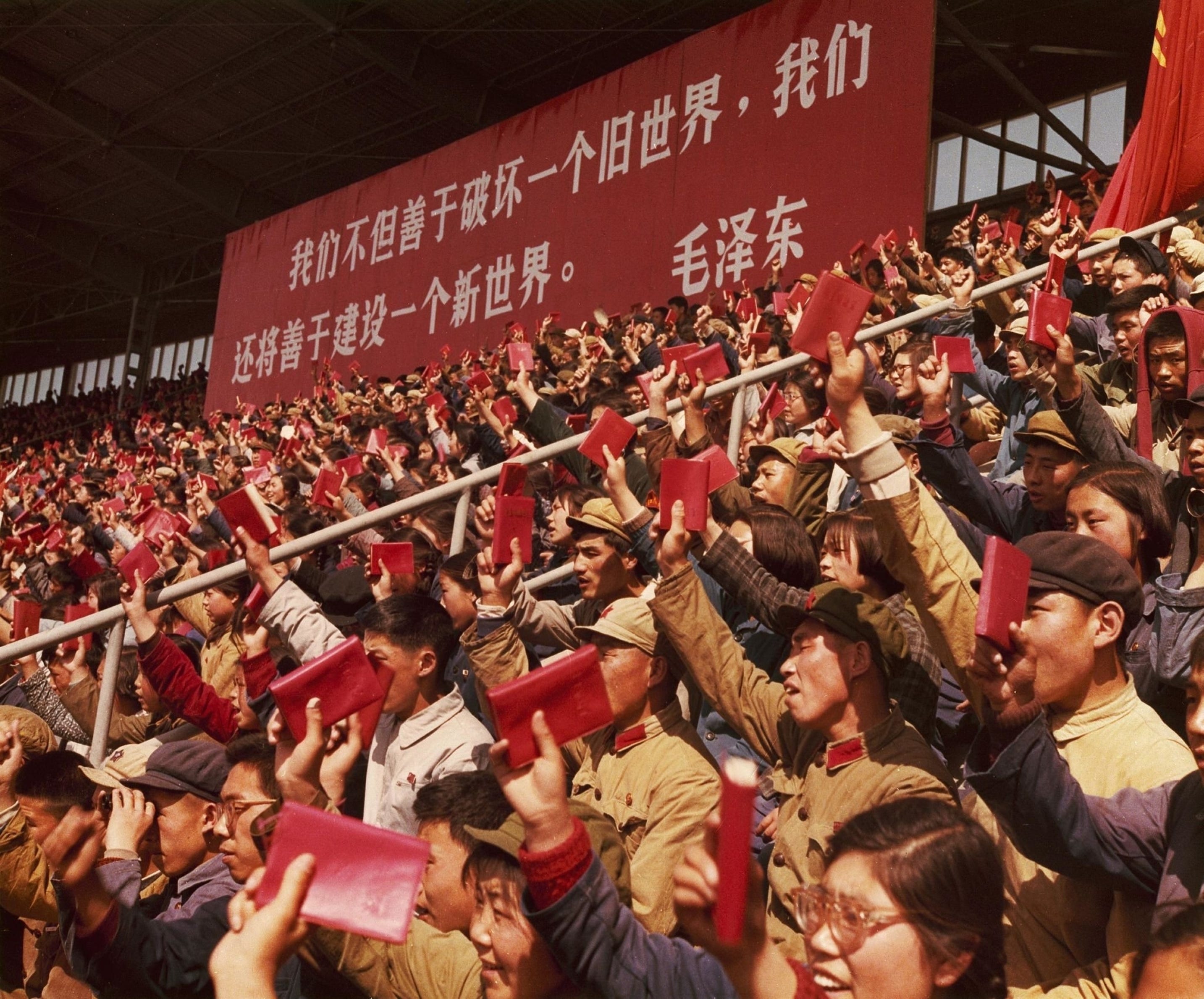
The land was not the only thing redistributed. Traditionally, Chinese women had been treated as second-class citizens. They too were granted land, in one of the largest transfers of property in recorded history. The Marriage Law of May 1950 abolished arranged and forced marriage, polygamy and concubinage, and made divorce a right. In 1953 alone, 1.4 million divorce petitions were filed. The last recorded case of foot binding was in 1957. Of the women who married between 1950 and 1965, 70 per cent worked. Of those who married between 1966 and 1976, 92 per cent did. These were among the highest rates of female employment anywhere in the world at the time. The work was not valued equally: in the collectives a man doing field labour typically earned 10 work points a day, a woman six to eight.
Then came the attempt to do all of it at once. Mao’s Great Leap Forward led to the construction of new factories, hospitals, medical schools and agricultural People’s Communes.
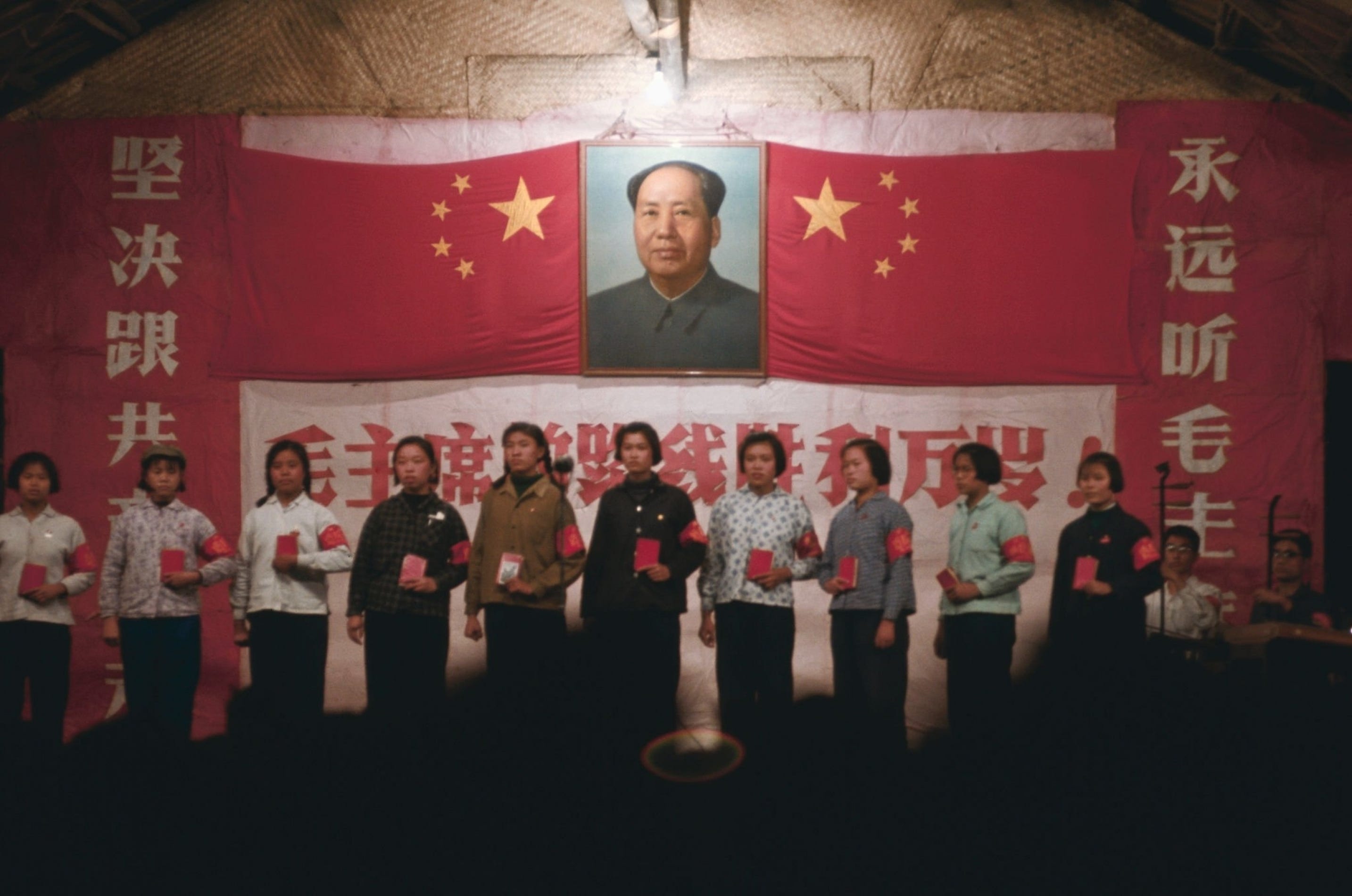
The next fight was inside the party itself. Mao and others were concerned that a revisionist elite led by Liu Shaoqi and Deng Xiaoping had emerged within the party, seeking to re-establish capitalism in China. In 1966, he launched the Cultural Revolution to combat this capitalist-bourgeois ideology. Mao also distinctly distanced himself from the revisionist direction the Soviet Union took following the death of Stalin.
"This person does not grasp class struggle; he has never referred to this key link. Still his theme of 'white cat, black cat,' making no distinction between imperialism and Marxism." Mao
That fight had a theory behind it. Mao qualitatively developed Marxism by adapting Marxism-Leninism to the unique conditions of China and contributing to Marxist-Leninist ideology. He emphasised that the revolution under the Dictatorship of the Proletariat must continue, particularly within the party, through an understanding of internal contradictions.
Whatever the arguments about the theory, the results are in the record. By the time of Mao’s death in 1976, his policies had significantly improved the lives of the Chinese people. In 1965, China had 200,000 doctors, and life expectancy increased from 35 in 1949 to 63 in 1975.
By the middle of the 1970s China had already crossed the epidemiological transition. Its people were dying of the diseases of old age rather than the diseases of poverty, and they had got there years ahead of every other country at the same level of income.
The same story shows up in the schools. In 1949, four in five Chinese people could not read. Only 20 per cent of children were enrolled in primary school and 6 per cent in middle school. Capital investment in school buildings rose tenfold across the 1950s. Primary enrolment reached 80 per cent by 1958 and 97 per cent by 1975. Secondary enrolment reached 46 per cent by 1977. By the 1964 census, illiteracy among those aged fifteen and over had fallen to about half, roughly 100 million people taught to read in fifteen years.
Two Men Who Founded Communist Party of China Weren't Chinese

On 23 July 1921, thirteen Chinese men gathered in a house in Shanghai’s French Concession to found a party that would one day rule a fifth of humanity. Two of the men in the room were not Chinese. They were delegates of the Communist International in Moscow, and one of them had been sent to China on Lenin’s personal word.
Sources
Babiarz, Eggleston, Miller and Zhang, “An Exploration of China’s Mortality Decline under Mao: A Provincial Analysis, 1950-1980,” Population Studies 69(1), 2015
https://www.ncbi.nlm.nih.gov/pmc/articles/PMC4331212/Hipgrave, “Communicable disease control in China: From Mao to now,” 2011
https://www.ncbi.nlm.nih.gov/pmc/articles/PMC3484775/“Inequality of land tenure and revolutionary outcome,” Explorations in Economic History, 2012
https://www.sciencedirect.com/science/article/pii/S001449831200040XDiamant, Revolutionizing the Family, University of California Press
https://www.ucpress.edu/books/revolutionizing-the-family/hardcover“Re-examining the Impact of the 1950 Marriage Law: State Improvisation, Local Initiative”
https://library.fes.de/libalt/journals/swetsfulltext/7675420.pdfBulletin of the World Health Organization, “China’s village doctors take great strides,” December 2008
https://pmc.ncbi.nlm.nih.gov/articles/PMC2649581Xun Zhou, “From China’s ‘Barefoot Doctor’ to Alma Ata,” in Roberts and Westad (eds.), China, Hong Kong, and the Long 1970s, Palgrave Macmillan, 2017
https://link.springer.com/chapter/10.1007/978-3-319-51250-1_6Drèze and Sen, Hunger and Public Action, Clarendon/OUP 1989, chapter “China and India”
https://academic.oup.com/book/2070/chapter/141991095CIA, “Chinese Economic Prospects and Western Technology: Possibilities and Constraints,” 27 February 1978, CIA-RDP83B00100R000100050022-6
https://www.cia.gov/readingroom/document/cia-rdp83b00100r000100050022-6Peking Review 1976, No. 16, “Denial of the Difference Between Socialism and Capitalism Is Not Allowed”
https://www.marxists.org/subject/china/peking-review/1976/PR1976-16e.htmMao, “Report on an Investigation of the Peasant Movement in Hunan,” March 1927
https://www.marxists.org/reference/archive/mao/selected-works/volume-1/mswv1_2.htmMao, “On Coalition Government,” 24 April 1945
https://www.marxists.org/reference/archive/mao/selected-works/volume-3/mswv3_25.htm
Another interesting book to add, this one:
"The Chinese Communists:
Sketches and Autobiographies of the Old Guard"
by Helen Foster Snow (Nym Wales)
(Also known as "Red Dust" but did not want to post an Amazon-Link)
https://www.booklooker.de/B%C3%BCcher/Helen-Foster-Snow+The-Chinese-Communists-Sketches-and-Autobiographies-of-the-Old-Guard-Book-1-Red/id/A02Rh0oa01ZZj